
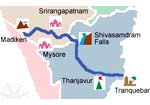
 The descent of the Cauvery from the plump confines of Coorg to the Coromandal coast is a journey rich in river graces. Though short, compared to the other sacred rivers of India, the Cauvery is undoubtedly the most queenly in her cultural journey from Karnataka to Tamil Nadu.
The Ganga of the north seems tired in comparison to the flow of her southern understudy and here the brilliant culture of the South continues to flourish while in the Cow Belt, a golden past has to be dredged up to compensate for the death of any current civic graces.
Like the other rivers of the peninsula, the Cauvery flows weakly after the winter rains. Heavy irrigation commitments mean that in the lean season you can pass down much of the river in the delta and hardly see any water in its bed. Upstream, Coorg is a pleasure in all seasons and the people are probably the most friendly constructive and prosperous in the whole of India.
The source at Tala Cauvery has always seemed slightly geographically suspicious to me especially when the range in which its rises — Brahmgiri — is also applied to the source of the Godaveri. The latter source at Trimbakeshwar is pure priestly fraud for the river does indeed rise in the Brahmagiri hills above.
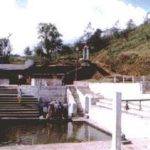 The Cauvery also has some suspicious priestly activity at the annual birth ceremony of the river and this is why strict geographical attribution of the source may not coincide with the wiles of the self-appointed custodians.
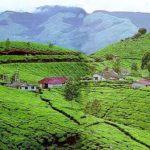
But the hills of Coorg are bracing and if you climb above Tala Cauvery you might even see the Arabian Sea. Everybody says you can but I’ve never met anyone who has!. The drive back to Mercara, now Madikeri, is one of the most leafy delights imaginable with the river gaining size from the cluster of hills that lead down to the Mysore plateau.
Now broad and brilliantly blue the dammed river at Krishnarajasagar bypasses the elegant town of Mysore, easily India’s best kept city, and narrows again to pass through the rocky course of the Ranganatithu bird sanctuary which lies before Tippu’s extensive lair, the island fortress of Srirangapatnam.
It is fashionable to resurrect Tippu’s virtues these days and certainly he was a warrior who might have altered Indian history. But whether for the better is a moot point! His acceptance of atrocities like adult circumcision for forced converts to his faith make his name in Kerala and Mysore a continuing target of revilement.
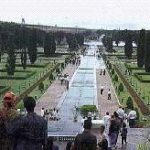 The river rejoins and that characteristic craft of the Cauvery the bamboo coracle can now be seen plied by fisherman. So portable is this round basket boat that the locals heft it on top of the bus to continue their sport along other channels.
At T Narsipur the main effluent of the Cauvery joins. This is the lovely Kabini which if explored upstream — where the borders of Kerala and Tamil Nadu meet Karnataka — will yield the largest gathering of elephants to be found in India. Sabu the Hollywood elephant boy incidentally hailed from the Maharaja’s of Mysore stable hereabouts.
Near the confluence is the much-touted temple of Somnathpur. Undoubtedly it is of great architectural and artistic interest but for spiritual uplift it is a very disappointing site. Also its tourist facilities must make this the lousiest place in India to spend a night. Nobody does of course since Mysore — with the best hotel bargains in the world — is so close at hand.
The river heads now to the Shivasamudram Falls, a lovely fanned out display and probably one of the most aesthetic sights on any Indian river. No doubt the Jog Falls give the Sharavati river magic unsurpassed, but the falls are so deep in their reach that you never see the river below.
To show her class the Cauvery leaving Karnataka through a wild and narrow gorge south of Bangalore does a sharp turn into Tamil Nadu to produce more scenic cataracts at Hogganakal. These “smoking stories” announce the end of the untamed river. On the trackless Karnataka shore is the run of forest and hills that harbour the ivory and sandal wood poacher Veerappan.
The Mettur dam like the Shivasamdram Falls represents early breakthroughs in river harnessing. At Karu the Cauvery turns west to its delta destiny, receiving water from the Palani Hills which hosts the highest peak in South India — Anai Mudai — in Kerala’s range of tea estates. Here roams the Nilgiri tahr. How did this mountain goat cross the Palghat gap from the Nilgiris?
Up the tributaries of the Cauvery are India’s most flourishing textile towns, Tirupur and Coimbatore in the Kongunad uplands. The delta starts in earnest at Tiruchi overlooking the island temple complex of Srirangam. Surprisingly for all its ceremonial gory and architectural style the seven gated “glimpse of heaven” lacks spiritual fireworks.
Priests and guides, touts and money changes pester the visitor and for once the orderly instructs of the south is a disadvantages, because you are trapped into the demands of commerce in a place of religion. Similarly at Trichy to climb the Rock Temple you have to buy tickets, extra for camera, though it is true the view of Srirangam from this angle — minus the priests and cadgers — is marvellous.
The river looks great but look your last upon it because now downstream in the delta it will be channelled for the rich rice crops which are either being sown, irrigated or lying in sheaves upon the road awaiting your vehicle to harvest their round-the-year cycle.
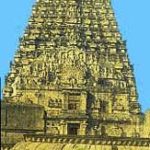 Undoubtedly the chief glory of the Cauvery’s splendid living culture is Thanjavur. What art and craft is still demonstrated in its vicinity. This is the early medieval state that gave its name to the Coromandal coast and “Coro” refers to the great southern dynasty of the Tamils, the Cholan. The “Big Temple” of Brihadeshwara may again lack any spiritual sparks but architecturally it is a major landmark in world temple skills.
To cover all the temple complexes in the delta region is to invite indigestion, each seeming to outdo the last. Kumbakonam is massive, Gangakondancholam inevitably more so; it was built by a son to outdo his father bid to glory with the Thanjavur Big Temple.
Nearby is the lovely musical township of Thiruvaiyru where the music of Thyagraja gave unstinted worship to the river goddess. Few are aware that this peerless composer was a nineteenth century figure and sang in Telugu so well that this language superseded Tamil as the court tongue. But never underestimate the sheer endurance of Tamil of all Indian languages. This is the oldest and still living unlike Sanskrit which for all its seniority died from elitism. Not so the musical Tamil.
The ignorance of the North Indian of the Southern facts of life explains why Hindi can never compete. You do not give up an ancient, devotional and literary language in favour of modern unmusical upstart! Even the suggestion of the South ever adopting Hindi is an insult only the boorish Northerner could be unaware of.
 In cultural norms too the Tamil ideal differs in many respects from that of the northern stereotype. Nowhere is this more obvious than in the heroine of the southern ancient epic poem The Jewelled Anklet. Kannagi unlike the simpering ideal of womanhood in the north takes violent revenge against the injustice inflicted on her husband. Unlike Sita who meekly accepts the fate meted by male chauvinists, Kannagi rages and wreaks revenge.
Why this epic germane to the Cauvery is because the story is set on its banks at the ancient port town on Kaveripoompattinam. Known to the Romans whose coins were once used as legal tender (just as Roman soldiers were used on sentry duty at the gates of some south Indian cities) this resort was referred to as “Cauvery emporium” to indicate the wealth of its trade.
Indeed the Roman senate complained bitterly that the gold of the empire was being drained by the love of luxury originating from the Coromandal coast — exotic animals, spices and luxury textiles. Thus the artistic skills f the “Cholas were a contributory factor to the fall of Rome!
Walk along the Coromandal coast and you get an extraordinary feel of the Tamil outward-bound instinct, so different from the North Indian’s fear of kala pani. In the south of the delta is the Portuguese inspired shrine of the Virgin at Velankani now saying mass in Tamil.
Higher along the coast is Nagore a great centre of Muslim mysticism. Then comes Karaikal which was once a French port and the road signs still imitate the blue enamel plaques of Paris. At Tarangambade, formerly Tranquebar, you find Dutch and Danish influences — all part of this sea going culture that made the Cholans the most adventurous of all early Indians.
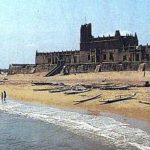
Poompuhar the site of the great emporium and epic of the ancient Tamils is the climax not just to the culture of the Coromandal coast but to the voyage of the Cauvery. Here she meets the sea and a statue of the goddess appears to rule the waves. It is however Kannagi.
The image of the Cauvery is a gentler aspect of the feminine where their daughter of the gods and the wife of the Rishi Agustyamuni is shown emptying her water pot. She chose to come in the form of a river goddess so she could bless more people and the experience of the whole course of the river is one of physical bounty.
 Both at her source in Coorg and debouchment at Poompuhar the river is bountiful. However squabbles over water-sharing have turned this asset of the south into an ugly confrontation between two neighbouring states. Energy is frittered away in tribunals that cannot increase the finite amount of water available in any given river.
No serious planning has been done it seems since the Cholan king, Karaikal nearly 2000 years ago lined 100 kilometres of the delta streams to foster better harvests. Anicut is further evidence of ancient care for water management and medieval works of a smaller kind can be found in Karnataka.
To see the descendants of the Cholas on the shore lashing their katamarans for the daily catch is a splendid throwback to the glory of one Indian dynasty that welcomed challenge and did not see the real world as maya.
Incidentally it was at Srirangam that Ramanuja modified Shankarcharya’s doctrine of maya to allow the world affirming sensibilities of the Tamil to celebrate nature as a real object of worship instead of as a nebulous spirit.
I was particularly happy to see the fishermen playing out their long red nets for this very scene is captured in early Tamil literature. The bustle, expertise and fearlessness of the Coromandal sailor on his unsinkable craft is something to see.
The poetry of some 2000 years still comes alive where the Cauvery meets the sea, and then the reason why the Tamil takes such pride in his language hits you. It has outlived both Kalidas’s description of the Yamuna joining the Ganga at Prayag and Homeric Greek’s homage to the wine-dark sea.
Photographs courtesy Government of India Tourism and Karnataka Tourism web sites.